MPPT or PWM: which charge controller to choose
A PWM controller simply connects the panel to the battery, chopping the connection to hold the voltage down. The panel is therefore forced to work at the voltage of the battery, often far from its maximum power point. A module with a Vmp of 20 V wired to a battery sitting at 13 V immediately gives up a third of its potential output.
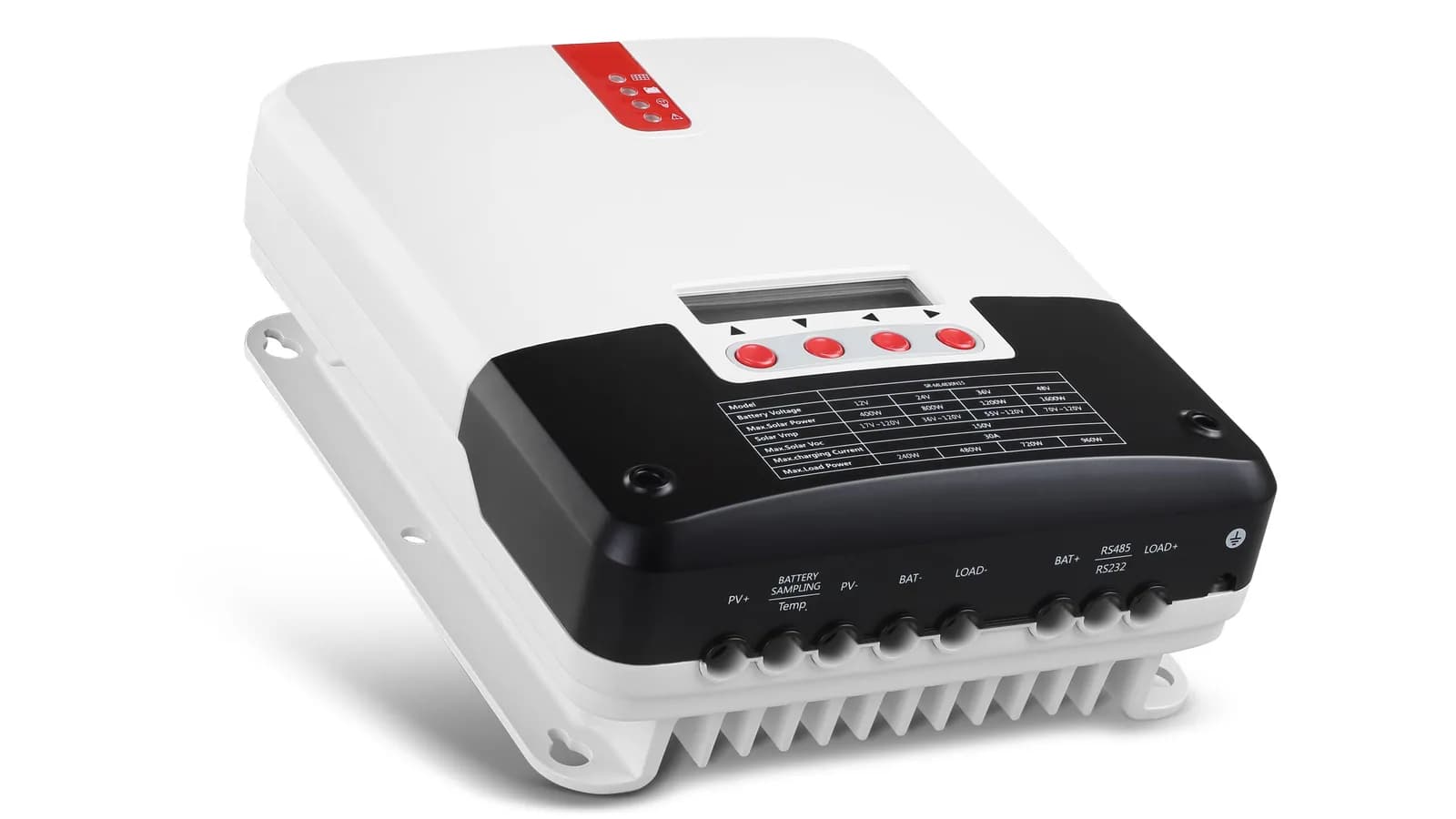
An MPPT controller does something else: it actively converts the surplus voltage into extra charging current. The panel works at its optimum and the controller turns volts into amps. The typical gain is 15 to 20% in clear weather and can exceed 30% in cold or overcast conditions, when the voltage of the module climbs.
The economics are therefore a question of size. On a 100 W panel, a gain of 20% is 20 W, roughly 0.1 kWh a day: the price difference between a PWM and an MPPT never pays itself back. On a 2000 W array, the same percentage is 400 W and the investment is recovered in a single season.
The MPPT also opens a door that PWM keeps shut: wiring the panels in series at high voltage. Over a long run between the array and the utility room, a high voltage allows a far thinner cable, which often saves more on the wiring than the two controllers differ in price.
Our rule of thumb: PWM under 300 W of panels, MPPT above. And MPPT without exception as soon as the distance between the panels and the battery exceeds fifteen metres.